CertReady Growth Operating Console
The roadmap for turning course approvals into profitable growth.
A mobile-friendly touchstone for the goals, economics, automation, and weekly decisions that let CertReady grow mostly solo without losing compliance control.
Measure unit economics
tracking + breakeven
Launch low-friction bets
4-5 candidate portfolio
Fund harder markets
cash flow + partners
Growth map
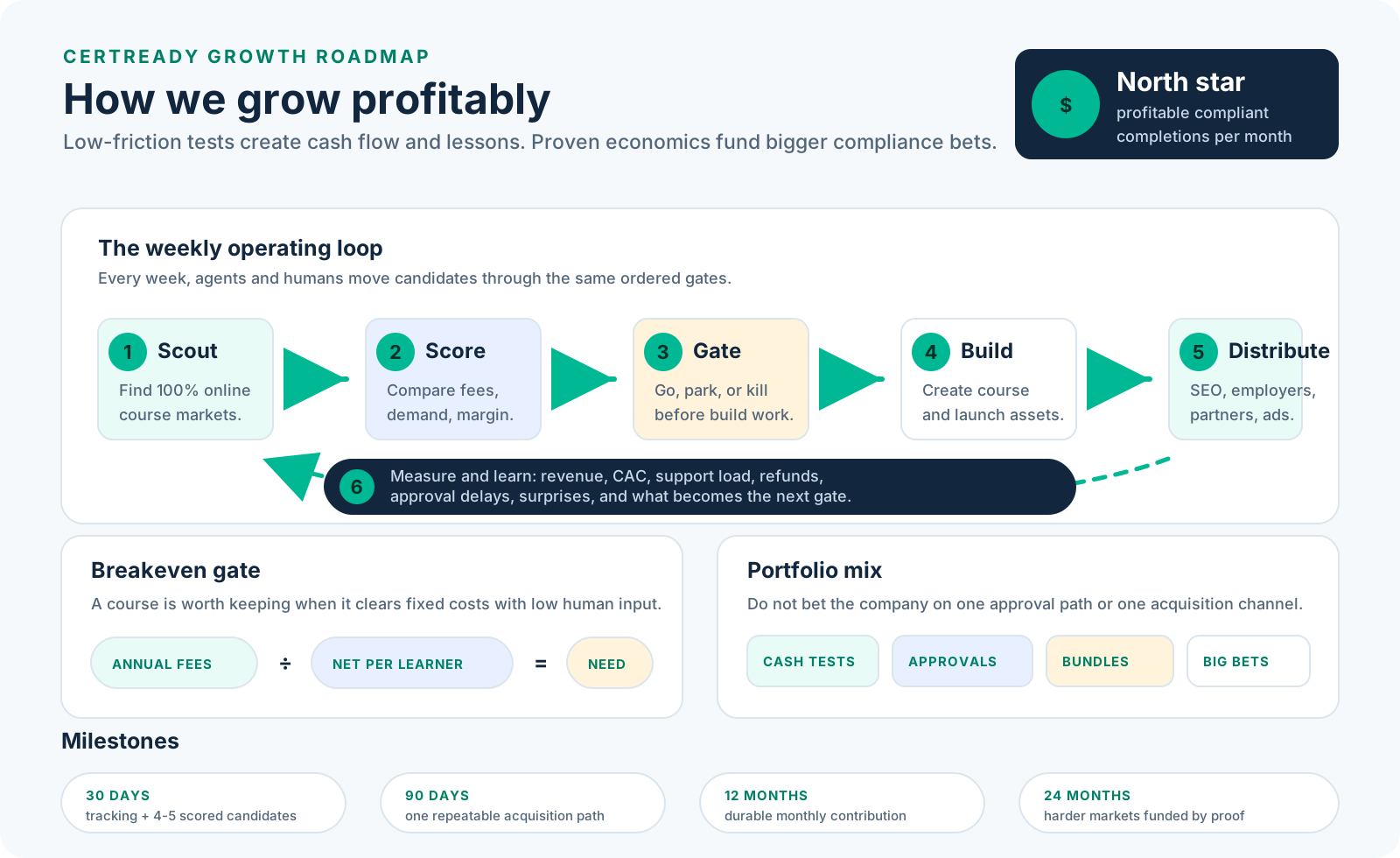
The ordered system: choose the right markets, pass the gates, launch cleanly, then feed every lesson back into the next decision.
CertReady Growth Roadmap
How we grow profitably
Low-friction tests create cash flow and lessons. Proven economics fund bigger compliance bets.
North star
profitable compliant completions per month
Scout
Find 100% online course markets.
Score
Compare fees, demand, margin, approval path, and autonomy.
Gate
Go, park, or kill before build work starts.
Build
Create course, reviewer, checkout, and launch assets.
Distribute
Use SEO, employers, partners, official listings, and capped ads.
Learn
Feed revenue, CAC, support load, refunds, and delays into next week's gates.
Breakeven gate
Near-term portfolio
4-5
courses or products moving through market, approval, or validation
North star
profit
profitable compliant completions, not raw course count
Operating rhythm
learn
each course should make the next launch cheaper and cleaner
Growth path
solo
mostly autonomous systems first, paid help once cash flow supports it
How To Read The Map
The order matters: do not build before the economics, permissions, and support burden make sense.
Weekly course scouting is the first step. It becomes useful only when it feeds a decision gate, a build path, a distribution plan, and a measured learning loop.
Scout
Find online-compatible markets and rank them by economics, demand, approval path, and autonomy.
Gate
Kill weak bets early with breakeven, permission, attribution, support, and compliance checks.
Build
Agents create evidence-backed course applications, reviewer pages, checkout paths, and launch assets.
Distribute
Use free employer tracking, SEO, partners, affiliates, official listings, and capped ad tests.
Learn
Record unit economics, support load, regulatory surprises, and what should become the next gate.
Growth Roadmap
The goal is not to launch everything. It is to earn the right to launch harder things.
Early low-margin courses can be good if they are autonomous and teach the system. Bigger markets come later, funded by cash flow and cleaner operations.
Make the machine measurable
4-5 candidates scored, 2-3 best revenue tests chosen
tracking, breakeven math, free employer push-through, and no regression on active approvals
Find one repeatable path
2-3 courses or products in market, approval, or validation
small paid tests, employer distribution, one repeatable launch packet, and support-load data
Build durable monthly revenue
enough contribution margin to fund harder states, partners, or contractors
profitable completions, renewal capture, course factory gates, and trusted acquisition data
Compound the course factory
larger markets and harder compliance bets become affordable
more automation, better QA, stronger official listings, and selective paid growth
For Baptiste
A clear one-page view of where CertReady is going, what matters this month, and why a course is worth doing.
For agents
A compact operating brief that points back to durable docs, scoring rules, gates, and source-of-truth files.
For partners
A plain-English explanation of how CertReady grows: low-friction starts, free employer tracking, and compliance-first automation.
Weekly Bet Selection
The Growth Scout uses weighted inputs so the best options rise every week.
Low revenue is fine when the course is autonomous and contribution-positive. Low revenue plus fixed fees and manual work is a trap.
| Factor | Weight | Scout question |
|---|---|---|
| Breakeven and fixed fees | 18% | How many completions per month cover registration, renewal, provider, license, agent, bond, and filing costs? |
| Autonomy after launch | 15% | Can the course keep running with low human support, reporting, renewal, and regulator handholding? |
| Regulatory friction | 14% | How clear is the approval path, how long does it take, and can we begin waitlist or training-only revenue before approval? |
| Market demand evidence | 13% | Is there evidence of buyer volume, renewal cycles, employer need, official provider lists, or search demand? |
| Contribution margin | 12% | After state pass-through fees, Stripe, proctoring, ad cost, support, refunds, and vendor costs, what do we keep? |
| Launch speed | 10% | Can agents create the course, reviewer package, checkout path, and first campaign quickly without touching the protected core? |
| Distribution advantage | 8% | Can free employer tracking, partners, SEO, affiliates, or official listings push learners through CertReady? |
| Strategic upside | 6% | Does this unlock a bigger state, a renewal wave, a reusable course category, or credibility for harder markets? |
| Competition pressure | 4% | Are incumbents cheap and strong, or is there room to win on convenience, tracking, speed, Spanish, or trust? |
Economics Gate
Every market needs a breakeven answer.
A state with $1,000 in annual fixed fees and $5 contribution per completion needs 200 completions per year, or about 17 per month, before it pays for itself.
Formula
breakeven completions = annual fixed costs / contribution per completion
Automation Loop
The weekly scout gets better by reading the plan, scoring the market, and recording what changed.
Scout
Find new markets and refresh stale leads every week.
Score
Apply the weighted model: economics, autonomy, friction, demand, margin, speed, distribution, strategy, competition.
Brief
Write a Gate 0 brief for the best candidates before course build work starts.
Validate
Email regulators and confirm fees, timelines, provider acceptance, and revenue permissions.
Build
Only build candidates that pass the economics, autonomy, permission, and evidence gates.
Learn
Record what was wrong, update weights, and feed the next weekly scout run.
Current Portfolio Read
Candidates move because evidence changes.
Tennessee alcohol
Strategic bet
Large hospitality market, two-year cycle, existing course work, and likely meaningful renewal demand.
Economics: Must model program fee, instructor fee, per-completer fee, support, and reporting before final launch priority.
Next: Confirm fees, submission path, RLPS mechanics, and provider expectations with TABC.
Utah food handler
Low-friction cash-flow test
Online provider path exists, fits existing food-handler content, and official permit need creates buyer intent.
Economics: Low price, likely low net. Worth it only if county/local health department mechanics are mostly automated.
Next: Confirm provider approval timeline, permit fee handling, and local health department reporting flow.
Arizona Title 4
Validate now
Online course application path is visible and no published provider fee was found in the first pass.
Economics: Potentially decent if annual certificate volume exists, but demand is narrower than universal food-handler markets.
Next: Email DLLC to confirm new-provider acceptance, hidden fees, trainer expectations, and annual volume.
Texas food handler
Parked but useful
Huge market, clear online provider lane, but crowded and price-compressed.
Economics: $600 application fee means breakeven is easy if autonomous, painful if ads or support are required.
Next: Revisit after Utah or when employer push-through is proven.
Source Of Truth
Agents should read these files before ranking new markets.
The page is for humans. The documents are the durable instructions the Growth Scout and future agents should use.